Pocket Door vs Barn Door: How to Choose for a Small Room

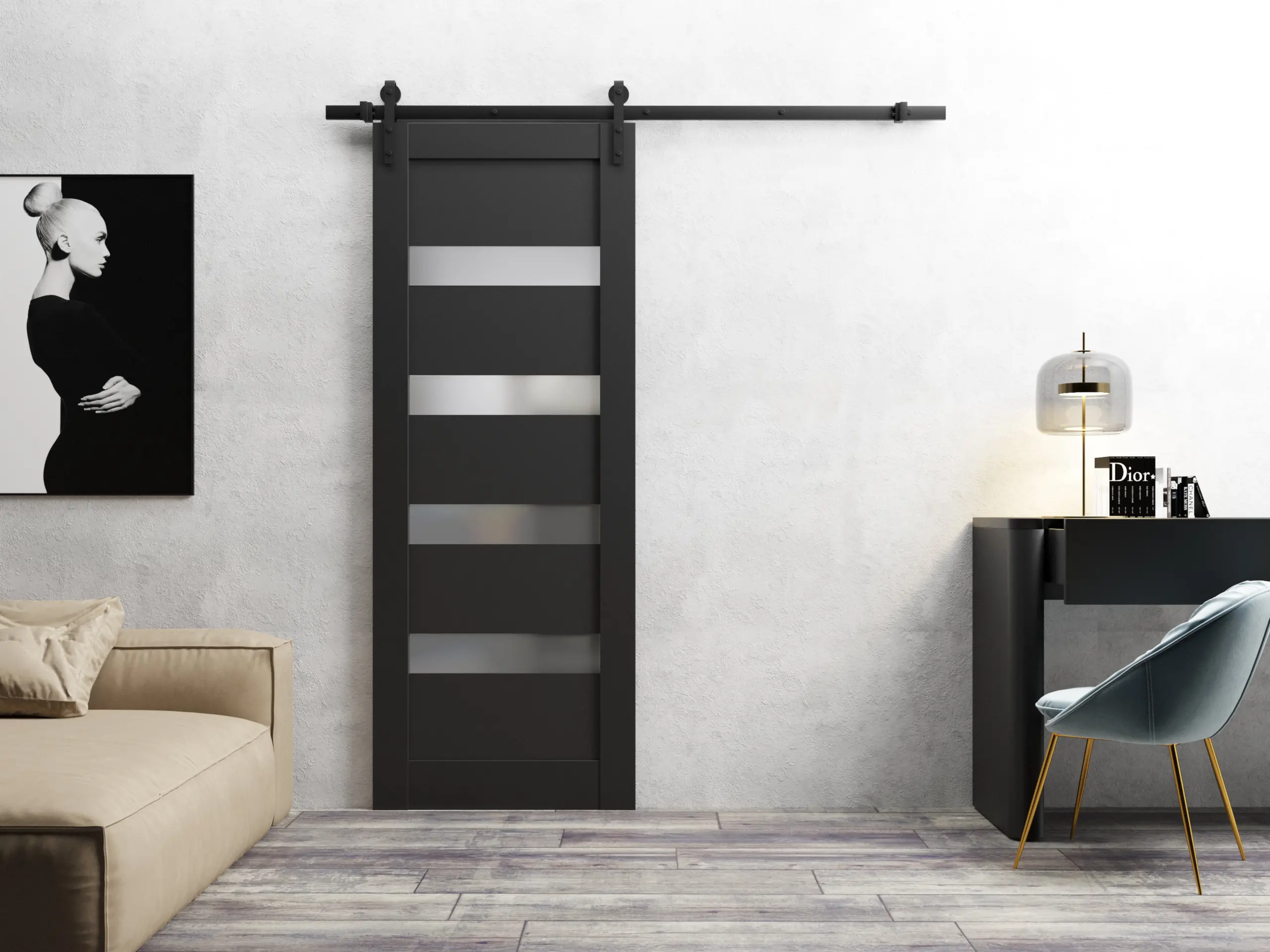
Comparing a pocket door vs barn door is about more than saving the space used by a swinging panel. Both slide, but they use the surrounding wall in different ways. The better choice depends on what is inside that wall, what is mounted on its surface and how much remodeling you want to undertake.
Start with the room plan rather than the door photograph. Our sliding door collection includes different configurations, so confirm the complete system before comparing prices.
The Main Difference: Inside the Wall or Along It
A pocket door slides into a cavity within the wall. When open, most of the panel is concealed. A barn-style door travels across the face of the wall on a surface-mounted track. It remains visible when open and needs a clear area beside the doorway.
Neither system creates space from nothing. The panel still needs somewhere to travel. Mark the full open position on a floor plan and check that the door can move without meeting furniture, trim, a nearby opening or another panel.
When a Pocket Door Makes Sense
A pocket system can work well during a larger renovation when the wall will already be opened. It keeps the door out of view and may preserve usable wall surface in the finished room, subject to the system’s restrictions on fasteners and attachments.
The wall cavity must be suitable for the chosen frame. Existing plumbing, wiring, structural elements or other services can affect feasibility. Have the installer assess the wall before ordering. The required opening and wall construction come from the specific frame instructions; avoid using a generic “double the width” rule as an ordering dimension.
For example, Johnson Hardware’s 1500 Series information distinguishes the frame kit from items such as the door, jambs and pulls. That illustrates why the words “pocket door kit” alone are not a complete scope of supply. Check the actual listing you intend to buy.
When a Barn Door Makes Sense
A surface-mounted sliding door may be attractive when opening the wall for a pocket frame is impractical. The exposed panel and track can also be a deliberate design feature. However, the track still needs appropriate support, and the door must clear the opening trim and surrounding finishes.
Keep the travel area clear of artwork, switches, outlets and furniture that would interfere with the panel or handle. The track length, overlap and offsets depend on the hardware. Johnson’s wall-mounted system information describes surface sliding as an alternative where a pocket installation is not practical; it does not make every wall suitable for every track.
Compare Privacy and Everyday Use
A sliding panel may leave different edge gaps from a conventional hinged door. Do not assume that either option provides the same visual or acoustic separation as a well-fitted hinged set. For a bedroom or bathroom, discuss sightlines, closing details and an appropriate privacy function before selecting a model.
Check how the handle works from both sides and whether it remains reachable in the fully open position. If you want soft-close hardware, confirm compatibility with the panel’s weight and dimensions. A compatible closer is a system detail, not a feature every sliding door automatically includes.
Compare the Whole Project Cost
Compare a door-and-installation scope rather than slab prices alone. A pocket project may involve wall opening, framing and finish repairs. A barn project may need suitable track support, spacers or trim adjustments. Painting, pulls and privacy hardware can be separate items in either case.
- Record the opening width and height and the finished floor level.
- Photograph the wall on both sides, including switches and adjacent openings.
- Mark the door’s fully open position and handle projection.
- Confirm included components and any work needed to prepare the wall.
- Ask how the panel and rollers can be accessed for future adjustment.
Choose the System Before the Finish
A pocket door is worth exploring when you can accommodate the cavity and want the panel concealed. A barn door is worth exploring when the wall surface can provide a clear travel path and the visible track suits the room. If neither arrangement meets the room’s privacy or clearance needs, revisit a hinged or folding configuration.
Compare our pocket doors and barn doors, then share your wall photos and opening dimensions with DoorsPlusWindows before ordering.






 Steel Security Doors